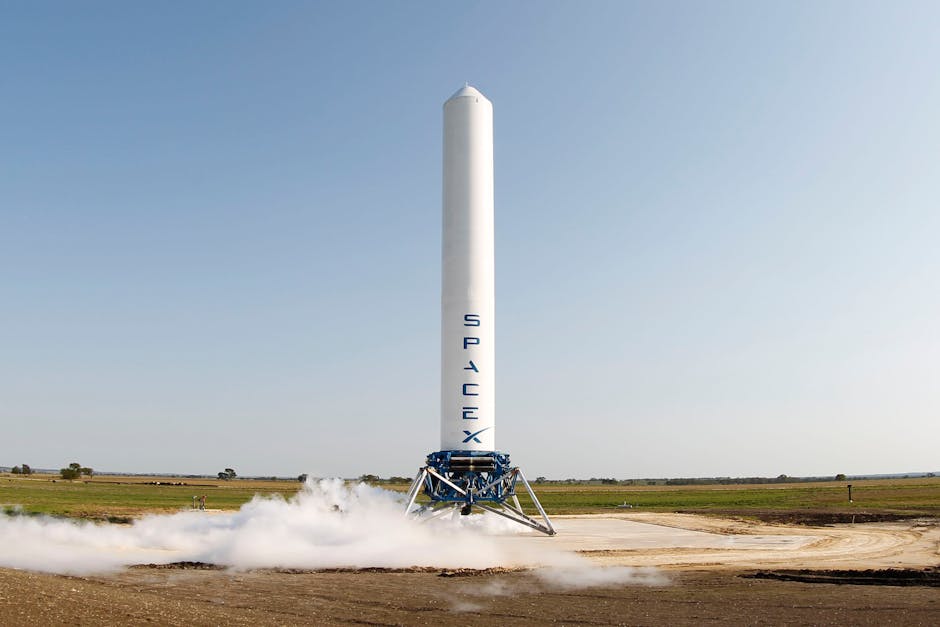
The roadshow started June 4. The price was already set: $135 per share, fixed, no range. SpaceX plans to raise $75 billion by selling 555.6 million shares at $135 each, a move that would make it the largest initial public offering in history and value the firm between $1.75 trillion and $1.77 trillion. The deal is expected to price June 11 and list on Nasdaq under the ticker SPCX on June 12.
The previous record belongs to Saudi Aramco. That 2019 debut pulled in roughly $29.4 billion. SpaceX's planned offering would surpass it by more than 2.5 times.
Goldman Sachs is the lead banker for the offering, followed by Morgan Stanley, Bank of America, Citigroup, and JPMorgan Chase. Twenty-one banks are involved in the syndicate in total. Retail investors are earmarked for 30% of the float — three times the standard mega-cap norm.
What the S-1 actually shows
The fixed price is the unusual part. Most issuers at this stage offer a range to test demand sensitivity. SpaceX skipped that step after a series of testing-the-waters meetings before the roadshow launched. At the $135 per share price tag, SpaceX would be valued at $1.77 trillion, which assumes the EchoStar spectrum and Cursor transactions close.
SpaceX is targeting a $1.75 trillion valuation on listing day — larger than Microsoft, trailing only Apple and Nvidia — despite posting a $4.28 billion net loss in Q1 2026 alone and an accumulated deficit of $41.3 billion. For a company with $4.94 billion in GAAP net losses, that multiple assumes flawless execution.
SpaceX executed a 5-for-1 stock split on May 4, 2026. On a post-split basis, the December 2025 tender offer equates to roughly $84 per share. The reported IPO price of $135 represents a 61% premium to that level, implying a market cap of approximately $1.75 trillion — more than double the December valuation in under six months.
Buried in the filing is a detail that doesn't belong to the launch business. SpaceX holds 18,712 BTC on its balance sheet, worth approximately $1.29 billion as of March 31, 2026. That makes Elon Musk's rocket company one of the largest known corporate Bitcoin holders on the planet.
Control and competition
Musk will own over 82% voting control after the offering, the filing said. The dual-class share structure gives public investors Class A shares while insiders hold Class B shares with greater voting power per share. Musk is not selling a single share in the offering.
The valuation math invites scrutiny. At $135 per share, SpaceX prices at roughly 94 times its 2025 revenue. At $18.7 billion in 2025 revenue, SpaceX generates less than a tenth of what Amazon, Apple, or Alphabet produce. Yet it enters the public market at a valuation higher than Meta and Tesla combined on a revenue basis.
Some analysts are drawing historical comparisons that aren't flattering. A flurry of initial public offerings from mega-cap companies this year could mark the top of the market, strategists said, drawing parallels with the late-1990s dot-com bubble. "A $1.75 trillion valuation would put SpaceX on 67 times sales, three times as much as Nvidia's rating based on its past financial year and latest share price," one analyst noted to CNBC.
The hotly anticipated debut comes as AI companies Anthropic and OpenAI are also racing to go public. Anthropic got out ahead of its primary rival when it confidentially filed its IPO prospectus with the Securities and Exchange Commission. Three companies, each unprofitable, each targeting public markets in the same calendar year, each carrying a valuation that would rank them among the largest companies ever to list.
For small business owners and operators who use Starlink for connectivity — particularly in rural areas, on job sites, or in maritime operations — a public SpaceX means quarterly earnings calls, analyst pressure on margins, and the possibility that Starlink subscription pricing becomes a lever the company pulls when public market expectations shift. Starlink is the fastest-growing and key revenue driver supporting the premium valuation. Starlink has 9 million paying subscribers and runs on recurring subscription revenue. Keeping that base happy is now a public market problem, not just an operational one.
The deal prices Wednesday. Whether demand holds at a fixed $135 — with no range to flex into — is the first real test of whether 2026's appetite for AI-adjacent infrastructure has any ceiling.